Before the First Stitch: The Financial Avalanche That Strikes Low-Income Families at the Emergency Room Door
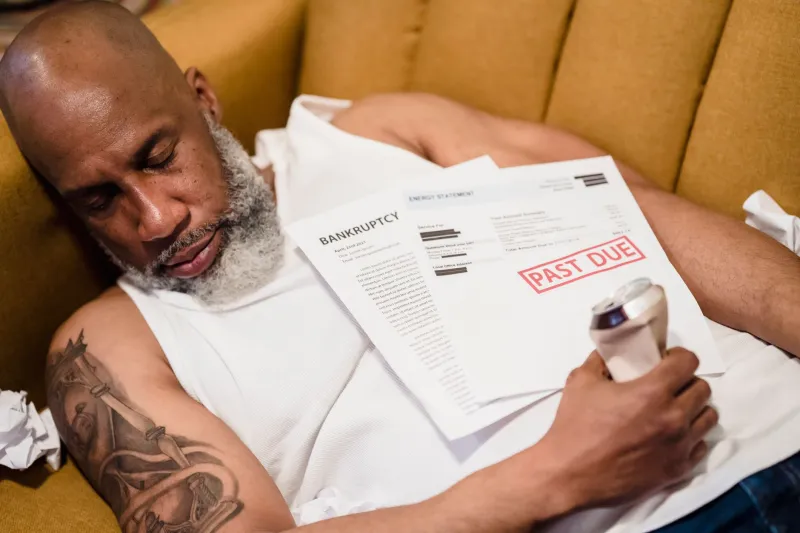
There is a moment familiar to far too many American families—the moment when a health emergency collides with an empty bank account. A child's fever spikes past 104 degrees at midnight. A parent clutches their chest on a Tuesday afternoon. The body demands immediate attention. But before that attention arrives, a different kind of crisis has already begun, one measured not in vital signs but in dollars that a family simply does not have.
For low-income households across the United States, the emergency room is simultaneously a lifeline and a financial trap. The medical care provided inside those walls can be essential, even lifesaving. Yet the costs that accumulate before a physician ever enters the room—transportation, parking, lost wages, administrative processing fees, and facility surcharges—constitute what many advocates now call an invisible tax on poverty. It is a tax levied not by legislation but by structural neglect, and its consequences echo through households long after the discharge papers are signed.
The Meter Starts Running Before the Doors Open
Consider what it takes for a family without reliable transportation to reach an emergency room in a mid-sized American city. A rideshare from a lower-income neighborhood to the nearest hospital can cost between $15 and $40 each way, depending on the time of day and surge pricing. In rural communities, where hospitals may be thirty or fifty miles distant, the figure climbs considerably higher. For a household operating on a weekly budget measured in hundreds rather than thousands of dollars, that single line item can represent a meaningful portion of available funds.
Ambulance transport, often the only option when a condition is severe, introduces an entirely different order of magnitude. Base rates for emergency medical transport in many states begin at $1,200 and can exceed $3,000 before mileage charges are added. Even for patients with Medicaid, coverage gaps and billing disputes are common, leaving families to navigate complex appeals processes while managing an acute health crisis.
Those who manage to arrive at the emergency department under their own power face a different set of immediate costs: parking fees at hospital structures that can charge $5 to $10 per hour, a figure that compounds quickly during a multi-hour visit. For a caregiver accompanying a sick family member, these charges arrive with no warning and no waiver mechanism in sight.
Lost Wages: The Cost That Never Appears on a Bill
Among the most consequential yet least visible components of the emergency care burden is the loss of hourly wages. The majority of low-income workers in the United States are employed in jobs that offer no paid sick leave and no flexibility around unplanned absences. A visit to the emergency room that consumes six to eight hours—a conservative estimate for many non-critical presentations—translates directly into a lost shift.
For a worker earning $14 per hour, an eight-hour absence represents $112 in foregone income. For workers in tipped service industries or gig economy roles, the calculation is even more punishing, as the loss extends beyond base pay to include tips, bonuses, or per-delivery compensation. When the emergency involves a child and a working parent must accompany them, the household may lose two incomes simultaneously.
Research consistently demonstrates that this wage loss functions as a powerful deterrent. Families who cannot afford to miss work delay seeking care, converting manageable conditions into serious ones. What might have been addressed at an urgent care clinic or a primary care office—had either been accessible—arrives at the emergency room in a far more advanced state, requiring more intensive intervention and generating substantially higher costs.
Administrative Fees and Facility Charges: The Fine Print of Crisis
For families who do present at an emergency department, the financial exposure continues to expand through mechanisms that are largely invisible at the point of care. Facility fees—separate charges levied by the hospital simply for using its emergency department—can range from a few hundred dollars to well over a thousand, independent of any specific service rendered. These fees appear on bills weeks after the visit, often surprising patients who believed their insurance or Medicaid coverage would absorb the cost.
Administrative processing charges, registration fees, and triage assessments similarly accumulate before any treatment is delivered. In some hospital systems, patients presenting with lower-acuity conditions are assigned a facility fee level that does not reflect the relative simplicity of their care. The billing structure, designed for institutional efficiency, does not accommodate the financial reality of households living paycheck to paycheck.
For the uninsured—a population disproportionately composed of low-wage workers, undocumented immigrants, and adults who fall into the Medicaid coverage gap in non-expansion states—these charges arrive with no negotiated discount and no network adjustment. The full chargemaster rate, often many times higher than what insured patients are billed, becomes the opening figure in a debt negotiation that most families lack the resources or knowledge to navigate effectively.
How Debt Deters Future Care
The consequences of a single emergency room visit extend far beyond the immediate financial shock. Research published in health economics journals and echoed in community health assessments across the country documents a consistent pattern: families who exit an emergency encounter with significant medical debt become measurably less likely to seek care in the future, even when that care is medically necessary.
This deterrence effect is not irrational. It is a learned response to a system that has repeatedly demonstrated its capacity to cause financial harm. Families who have received collection notices, had wages garnished, or watched their credit scores collapse following a medical emergency carry that knowledge into every subsequent health decision. The result is deferred care, worsening chronic conditions, and eventual return visits to emergency departments at higher cost and greater clinical complexity—a cycle that serves no one well.
In communities where this pattern is concentrated, the public health implications are substantial. Emergency departments become de facto primary care providers for populations with no other accessible option, straining resources and reducing the quality of care available to everyone.
Community-Led Responses and the Push for Structural Reform
Across the country, community organizations and advocacy networks are developing responses that operate at multiple levels simultaneously. Medical-legal partnerships embedded within community health centers help families challenge erroneous bills, negotiate payment plans, and access financial assistance programs that hospitals are legally required to offer but rarely advertise. Lay health navigator programs train community members to guide their neighbors through insurance enrollment, billing disputes, and eligibility determinations.
Some municipalities have piloted transportation subsidy programs specifically targeting emergency medical access, partnering with rideshare companies and transit authorities to reduce the cost of reaching care. Community health workers employed by neighborhood organizations serve as bridges between households and health systems, often identifying and resolving administrative barriers before they become financial catastrophes.
At the policy level, advocates are pressing for expanded Medicaid in the remaining holdout states, broader application of hospital charity care requirements, caps on facility fees for low-income patients, and mandatory plain-language disclosure of all costs at the point of registration. Several states have enacted or are considering legislation that limits the use of aggressive debt collection practices against medical debtors, including restrictions on wage garnishment and credit reporting.
A System That Can Do Better
The financial burden that descends on low-income families at the emergency room door is not an accident of nature. It is the cumulative result of policy choices, institutional practices, and systemic gaps that have never been designed with the most vulnerable patients in mind. Acknowledging that reality is the first step toward changing it.
Communities that invest in preventive care access, transparent billing practices, and robust financial assistance programs do not simply reduce individual hardship—they strengthen the collective health infrastructure on which everyone depends. The invisible tax levied at the emergency room door is one that no family should be forced to pay. Eliminating it is not charity. It is the foundational work of a society committed to the well-being of all its members.