Justice by the Dollar: How Court Fees and Legal Costs Have Turned America's Courts Into a Debt Trap for the Poor
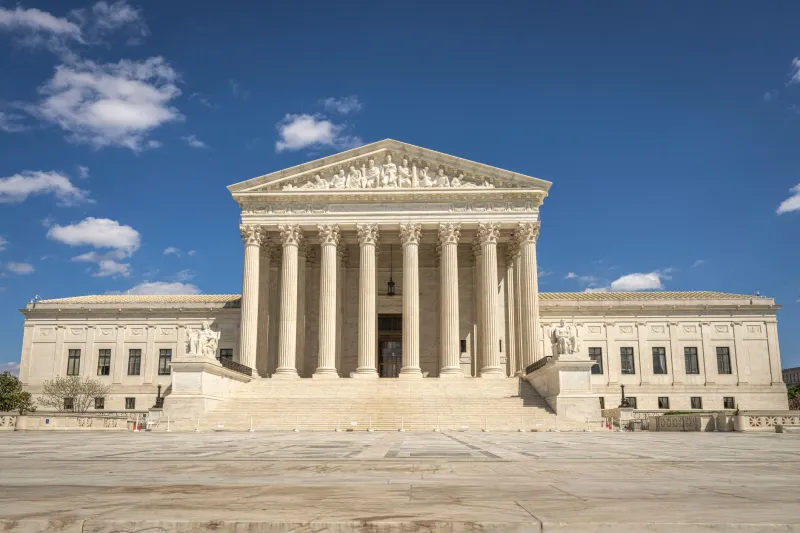
The Sixth Amendment guarantees the right to counsel. The Fourteenth Amendment promises equal protection. What neither document addresses is the fee schedule posted at the courthouse door—and what happens to the people who cannot afford to pay it.
Across the United States, a sprawling architecture of legal financial obligations has quietly transformed the justice system into a significant driver of poverty and economic instability. Court costs, filing fees, public defender charges, probation supervision fees, electronic monitoring fees, and civil judgment costs have proliferated over the past three decades, creating a parallel tax on legal involvement that falls with crushing disproportionality on low-income Americans. The result is not justice delayed—it is justice structurally denied.
The Anatomy of a Legal Debt Spiral
Consider a common scenario: a working parent in a mid-sized American city receives a traffic citation for a broken taillight. The fine is $150—manageable, perhaps, but not trivial on a minimum-wage budget. Life intervenes. The bill goes unpaid. A failure-to-appear notice is issued. A warrant is generated. The original $150 fine is now accompanied by a bench warrant fee, a late payment surcharge, and, in many states, an automatic driver's license suspension.
Without a license, driving to work becomes a legal risk. The parent drives anyway—because the alternative is unemployment. A subsequent stop results in a driving-on-suspended-license charge, which carries its own fines, its own court costs, and potentially a short jail sentence. The jail stay costs the parent their job. The job loss means the original fine remains unpaid, and the accumulating balance grows with interest.
This is not a hypothetical edge case. It is a documented, recurring pattern that civil rights attorneys and legal aid organizations encounter with remarkable consistency across geographic and demographic lines. The 2015 Department of Justice investigation into Ferguson, Missouri, brought national attention to this phenomenon, revealing a municipal court system that had been systematically weaponized against low-income Black residents to generate revenue. Ferguson was not an anomaly—it was a particularly well-documented example of a widespread practice.
The Mechanics of a Two-Tiered System
The legal system's fee structure operates, in effect, as a tiered system in which the cost of justice scales inversely with one's ability to pay. A wealthy defendant charged with the same offense as a low-income defendant will resolve their case quickly, paying fines without disruption to their employment or housing. The low-income defendant may spend months or years entangled in a system that charges for every interaction—including the supervision required to demonstrate compliance with the very terms designed to help them avoid incarceration.
Civil legal matters carry their own financial barriers. Filing fees for small claims cases, divorce proceedings, eviction defenses, and child custody disputes can range from modest to prohibitive depending on the jurisdiction. Individuals navigating these proceedings without legal representation—because they cannot afford an attorney and civil matters carry no right to appointed counsel—face an asymmetric battlefield in which landlords, employers, and creditors routinely appear with professional legal representation while tenants, workers, and debtors appear alone.
The consequences of this imbalance are not merely personal. When eviction proceedings are resolved in favor of landlords because tenants lacked counsel, housing instability ripples outward—affecting children's schooling, caregivers' employment, and neighborhood stability. When wage theft goes unchallenged because the filing fee represents a week's grocery budget, the economic harm compounds across households and communities.
Who Bears the Weight
The demographic contours of legal financial burden are not difficult to identify. Black and Latino Americans, who are disproportionately represented in low-income brackets and who face elevated rates of law enforcement contact due to well-documented disparities in policing practices, bear a correspondingly disproportionate share of court-imposed debt. Women navigating family court proceedings—particularly those fleeing domestic violence situations—frequently encounter fee structures that penalize their legal engagement at the moment of greatest vulnerability.
Immigrant communities face compounded exposure. Civil immigration proceedings carry no right to appointed counsel, meaning that individuals facing deportation—a consequence with permanent, life-altering implications—must either fund their own legal defense or navigate extraordinarily complex proceedings without assistance. Legal representation in immigration court has been shown to be the single most determinative factor in case outcomes, yet it remains entirely inaccessible to the majority of respondents based on cost alone.
Grassroots Legal Aid: Communities Reclaiming the Courts
In the face of these structural inequities, community organizations and legal aid initiatives have developed creative, high-impact models for extending legal access to populations the formal system underserves. Law school clinics, staffed by supervised students earning practical experience, have expanded the capacity of legal aid organizations in cities across the country. Nonprofit legal service providers have pioneered "know your rights" workshops in community centers, libraries, and faith institutions—equipping residents with the foundational knowledge to navigate encounters with the legal system more effectively.
Some organizations have developed court debt relief programs that negotiate directly with municipalities and courts to reduce or eliminate outstanding legal financial obligations for low-income individuals, removing barriers to license reinstatement and employment. Others have established courthouse navigator programs, in which trained community members accompany unrepresented individuals to hearings, helping them understand procedures and complete paperwork without providing formal legal advice.
Jan Kalyan Parishad views these community-based legal empowerment efforts as essential expressions of the principle that justice must be accessible to all residents—not merely those with the financial means to purchase it. When communities organize to democratize legal knowledge and representation, they are asserting a fundamental value: that equal protection under the law cannot be conditional on economic status.
Policy Reforms Gaining Traction
A growing coalition of advocates, researchers, and reform-minded legislators has begun to translate this community-level work into policy change. Several states have moved to eliminate or substantially reduce court-imposed fees for low-income individuals, recognizing that the revenue generated rarely justifies the social costs imposed. Washington State, California, and Michigan have each enacted meaningful reforms in recent years, including the elimination of juvenile court fees and the creation of ability-to-pay assessment requirements before fines are imposed.
The movement to reinstate driver's licenses suspended solely for unpaid fines—rather than for safety-related violations—has gained particular momentum, with more than a dozen states reforming their suspension policies since 2015. These changes acknowledge a practical reality: suspending a license for poverty does not collect debt; it deepens it.
At the federal level, advocacy organizations have pushed for civil Gideon legislation that would extend the right to appointed counsel to civil proceedings involving fundamental interests—housing, family integrity, and basic subsistence. While comprehensive federal legislation has not yet materialized, the conversation has advanced meaningfully.
The Measure of a Just Society
The question of who can access justice is, ultimately, a question about what kind of society America chooses to be. A legal system that functions equitably for those with resources while extracting compounding costs from those without is not a neutral institution—it is an active participant in the reproduction of inequality.
Communities across the country are refusing to accept that framing. Through legal aid clinics, debt relief campaigns, policy advocacy, and civic education, they are building an alternative vision: one in which the courthouse door opens equally for all who approach it, regardless of the balance in their bank account. That vision is worth fighting for—and worth funding.