Priced Out of Visibility: The Shadow Economy Quietly Consuming the Lives of America's Undocumented Workers

There is a version of American labor that never appears in government statistics, never qualifies for overtime protections, and never earns a single employer-matched retirement contribution. It is performed daily by millions of people who wake before dawn, commute in silence, and return home carrying a weight that has nothing to do with physical exhaustion. It is the economy of invisibility—and it is far more costly than most Americans realize.
For undocumented workers and those navigating uncertain immigration status, participation in informal labor markets is rarely a choice in any meaningful sense of the word. It is, instead, the logical outcome of a system that simultaneously demands their labor and withholds the protections that labor is supposed to provide. The result is not merely a wage gap. It is a comprehensive extraction of time, safety, dignity, and economic future.
The Architecture of Informal Work
To understand how this shadow economy operates, it helps to look at the structural conditions that create it. Federal employment verification systems, combined with the ever-present threat of deportation, effectively bar undocumented individuals from accessing formal employment channels. Without authorization to work legally, many are funneled into arrangements that exist outside the regulatory framework entirely—day labor pools, cash-only domestic work, subcontracted construction jobs, and agricultural positions that skirt wage-and-hour laws with troubling regularity.
What distinguishes informal work from simply being paid under the table is the compounding nature of its disadvantages. Workers in these arrangements do not merely earn less. They also forfeit access to unemployment insurance if work dries up, workers' compensation if they are injured on the job, and employer-sponsored health coverage when they fall ill. The informal economy, in other words, does not just underpay—it systematically strips away the scaffolding that allows low-wage workers in formal employment to absorb life's inevitable shocks.
For communities already navigating poverty, the absence of that scaffolding is not an inconvenience. It is a structural trap.
The Hidden Costs Beyond the Paycheck
Economists and community researchers who study informal labor markets have increasingly focused on what might be called the non-wage costs of working without legal protection. These are the expenses, risks, and burdens that do not appear on any pay stub but are nonetheless very real.
Consider transportation. Many undocumented workers cannot obtain a driver's license in states that restrict access based on immigration status. They rely on informal carpooling networks, pay premiums to unlicensed transportation brokers, or spend hours on public transit routes that were never designed to connect residential neighborhoods with industrial work sites. The time cost alone can amount to several additional hours per week—hours that could have been spent with family, in adult education programs, or simply resting.
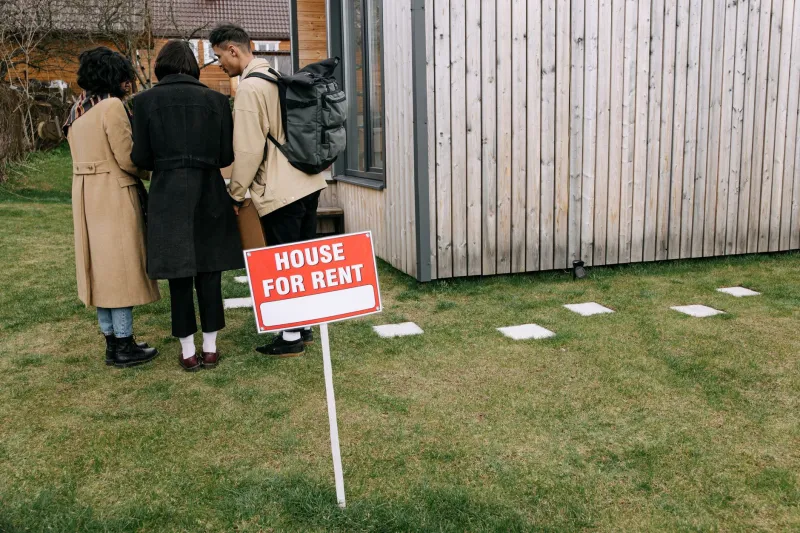
Consider housing. Landlords who know their tenants cannot easily report code violations or pursue legal remedies in housing court have little incentive to maintain properties. The result is a documented pattern in which undocumented renters pay market-rate rents—or above—for substandard housing, while absorbing the health costs associated with mold, inadequate heating, and overcrowding.
And consider the psychological dimension, which may be the most difficult to quantify and the most devastating in its long-term effects. The constant awareness that one's presence is legally precarious, that a routine traffic stop or a disgruntled employer could trigger a cascade of consequences, produces a form of chronic stress that public health researchers have linked to elevated rates of anxiety, depression, hypertension, and other stress-related conditions. This is not incidental to the experience of undocumented work. It is inseparable from it.
Exploitation as a Business Model
Where vulnerability is structural, exploitation tends to follow. Community advocates and legal aid organizations across the country have documented a disturbing pattern in which employers in informal sectors deliberately target undocumented workers not despite the risks they face, but because of them. Wage theft—the practice of failing to pay agreed-upon wages, denying overtime, or making illegal deductions—is significantly more prevalent in industries that rely heavily on undocumented labor.
In many cases, workers who raise concerns are met with explicit or implicit threats of immigration enforcement. The power imbalance is not incidental. It is the product. An employer who can credibly threaten a worker's deportation holds a form of leverage that no labor law was designed to address, because the law itself is the source of the asymmetry.
This dynamic extends beyond individual bad actors. It shapes entire industries. When undocumented labor becomes normalized as a source of cost savings, it creates competitive pressure on employers who might otherwise pay fair wages. The shadow economy, in this sense, does not merely harm the workers within it. It exerts downward pressure on labor standards for everyone.
Community-Led Pathways to Stability
Across the United States, community organizations have responded to this landscape not by waiting for federal immigration reform, but by building parallel systems of support that do not require legal status as a prerequisite for dignity or economic participation.
Worker centers—nonprofit organizations that serve as gathering points for low-wage and informal workers—have emerged in cities from Los Angeles to New York to Houston as one of the most effective community-led responses. Unlike traditional labor unions, which require formal employment relationships to organize, worker centers operate in the informal economy itself. They provide wage theft clinics, know-your-rights trainings, and emergency assistance funds. More importantly, they provide something harder to quantify: the experience of collective power in a context where individual workers have very little.
Community land trusts and cooperative housing models are also being adapted to address the housing precarity that disproportionately affects undocumented families. By removing housing from the speculative market and placing it under community stewardship, these models create stability that is not contingent on immigration status.
Some municipalities have gone further. Cities including Chicago, San Francisco, and Denver have issued municipal identification cards that allow undocumented residents to access banking services, library resources, and city programs—effectively creating a layer of civic inclusion that operates independently of federal immigration status. The results, where these programs have been studied, suggest meaningful improvements in residents' willingness to engage with public institutions, including health departments and schools.
Toward a Framework of Inclusion
The shadow economy is not a natural phenomenon. It is a policy outcome—the predictable result of legal frameworks that create a large population of workers with limited recourse and then express surprise when those workers are exploited. Addressing it requires both an honest accounting of how the system produces these conditions and a sustained commitment to community-level solutions that operate in the present, not in the future contingent on legislative action.
At Jan Kalyan Parishad, we hold that community development is inseparable from the question of who is included in the community in the first place. When millions of people live and work among us but are systematically excluded from the protections and recognition that make work sustainable, the entire fabric of community life is weakened. The shadow economy is not their problem alone. It is ours.
Building communities that are genuinely equitable means confronting the structures that profit from invisibility—and investing in the organizations, policies, and relationships that bring people into the light.