Derailed Before They Begin: The Policies Pushing Young Americans Out of Schools and Into Courts
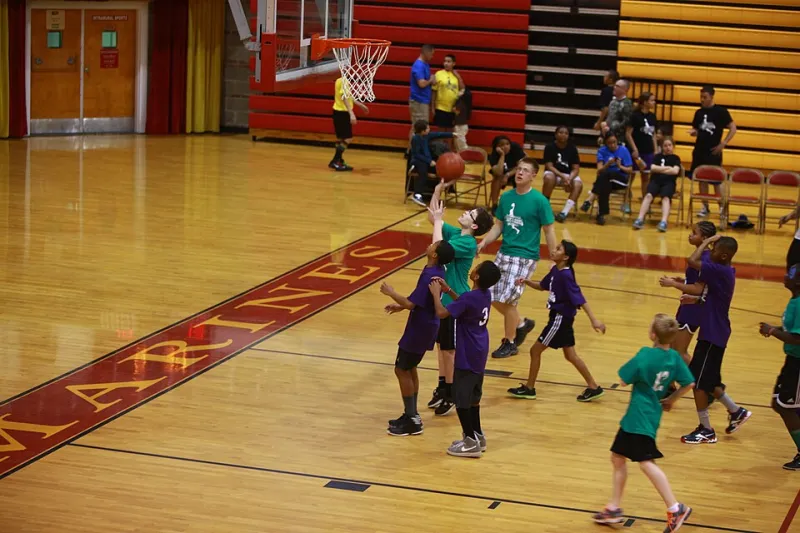
Photo: Cpl. Paul Peterson, Public domain, via Wikimedia Commons
A Pattern With a Name
It has come to be known as the school-to-prison pipeline — a term that, when first encountered, can seem like hyperbole. Surely the distance between a school hallway and a prison cell is vast. Surely the systems that govern each are entirely separate. The data, however, tells a different story.
Every year in the United States, millions of students are suspended or expelled from school. According to the U.S. Department of Education's Civil Rights Data Collection, Black students are suspended at rates more than three times those of their white peers. Students with disabilities are removed from classrooms at similarly disproportionate rates. And students who are suspended even once are significantly more likely to repeat a grade, disengage from school entirely, and eventually encounter the juvenile or adult criminal justice system.
These are not coincidences. They are the predictable outcomes of a disciplinary culture that prioritizes removal over intervention — and they carry consequences that extend far beyond the individuals affected, reshaping the economic and social fabric of entire communities.
The Zero-Tolerance Era and Its Aftermath
The architecture of the school-to-prison pipeline was largely constructed in the 1990s, when a wave of high-profile school violence prompted legislators across the country to adopt zero-tolerance disciplinary policies. These policies, often mandatory in their application, stripped school administrators of discretion and required automatic suspensions or expulsions for a wide range of infractions — many of them minor.
The original intent was safety. The outcome, however, was something quite different. Rather than creating safer schools, zero-tolerance policies created a disciplinary apparatus that was applied inconsistently and, as decades of research have since confirmed, with significant racial and socioeconomic bias.
Studies examining disciplinary records in school districts across the country have found that Black and Latino students are more frequently disciplined than white students for the same behaviors. In some districts, the disparities are staggering. What constitutes "defiance" or "disruptive behavior" — categories that account for a large proportion of suspensions — is, by nature, a subjective judgment. And when those judgments are made within systems that reflect broader societal biases, the outcomes reflect those biases as well.
"I watched kids get suspended for things that, in a wealthier school district, would have resulted in a conversation with a counselor," recalls a veteran educator and youth advocate based in Memphis, Tennessee. "The response to the same behavior was completely different depending on which school you attended, which neighborhood you came from."
The Compounding Consequences of Exclusion
Each suspension is, at its core, a removal from the primary environment in which young people develop the academic skills and social competencies that shape their futures. The research on what happens next is sobering.
Students who are suspended frequently fall behind academically during their absence. Without structured support for reintegration, many never fully recover that ground. Chronic absenteeism — whether voluntary or imposed — is one of the strongest predictors of high school dropout. And students who do not complete high school face dramatically elevated risks of unemployment, poverty, and involvement in the criminal justice system.
The pipeline is further reinforced by the growing presence of law enforcement in schools. The expansion of school resource officer programs, while intended to enhance safety, has in practice led to the criminalization of behaviors that were once handled internally. Students who once received a detention now sometimes receive a criminal citation. A fight that might have ended in a principal's office can instead result in an arrest record that follows a young person for years.
For communities already navigating economic hardship, the downstream effects are severe. Incarceration interrupts employment trajectories, disrupts family structures, and imposes long-term barriers to housing, education, and civic participation. The cost is borne not only by individuals but by entire neighborhoods.
Community Organizations Are Building a Different Way Forward
The encouraging reality is that communities across the country are not waiting for systemic reform to arrive from above. They are building alternatives from the ground up — and those alternatives are producing measurable results.
Restorative justice programs represent one of the most widely adopted and thoroughly studied of these approaches. Rather than responding to misconduct with exclusion, restorative justice frameworks bring together the student who caused harm, those who were affected, and trained facilitators to engage in structured dialogue aimed at accountability, repair, and reintegration. Districts that have implemented restorative justice models — including Oakland, California, and Denver, Colorado — have documented significant reductions in suspension rates and improvements in school climate.
Youth advocacy networks are another critical component of the community response. Organizations staffed by young people who have themselves navigated the juvenile justice system are providing peer mentorship, legal guidance, and advocacy training to students at risk of disciplinary removal. These networks operate on the understanding that young people are not passive recipients of whatever system processes them — they are agents of their own futures, given the right tools and support.
Community schools — institutions that integrate health services, family support, and community programming into the educational environment — are demonstrating that when schools address the underlying stressors that contribute to behavioral challenges, the need for punitive discipline diminishes substantially. A student who is hungry, experiencing trauma at home, or struggling with an unaddressed learning difference is not a disciplinary problem to be removed. They are a young person in need of support.
Policy Change Is Necessary — But Not Sufficient
In recent years, there has been meaningful movement at the policy level. Several states have restricted the use of suspensions for minor infractions. The Obama administration's Dear Colleague guidance on school discipline, though subsequently rescinded, prompted widespread examination of disciplinary disparities. Advocates continue to push for federal legislation that would set clear standards for equitable discipline.
But policy reform, while necessary, is not sufficient on its own. The school-to-prison pipeline is sustained not only by specific laws but by a broader set of cultural assumptions about which young people are worth investing in and which are expendable. Changing those assumptions requires sustained community education, authentic youth engagement, and a willingness among school administrators, law enforcement, and policymakers to honestly examine the outcomes their systems are producing.
Investing in Futures, Not Cages
Every young person who is pushed out of a classroom and into the criminal justice system represents not only an individual tragedy but a collective failure — and a profound waste of human potential. The communities most affected by the school-to-prison pipeline are also, frequently, the communities with the most at stake in building stronger, more equitable futures.
At Jan Kalyan Parishad, we believe that community development begins with the youngest members of our communities. When we interrupt the pipeline — when we replace zero-tolerance with restorative practice, punishment with support, exclusion with belonging — we are not simply helping individual students. We are investing in the long-term health and resilience of the communities they will one day lead.
The pipeline can be dismantled. The evidence is there. What remains is the collective will to do so.


