When the Bus Never Comes: The Quiet Crisis of Mobility Poverty in Rural America
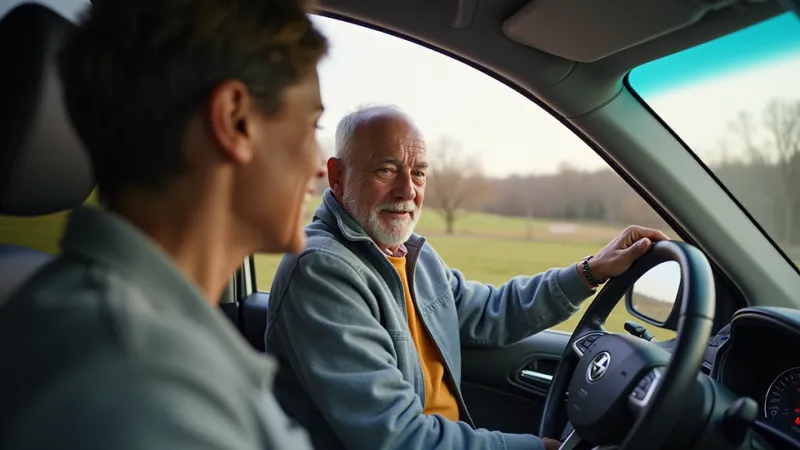
Photo: rural volunteer driver helping senior into car shuttle, via static.wixstatic.com
In parts of rural Kansas, the nearest hospital is an hour away by car. In the hollows of Appalachian Kentucky, it can be longer. For the millions of Americans without a working vehicle—or any vehicle at all—distance is not an inconvenience. It is a wall.
Transportation advocates have a name for the places where public transit simply does not reach: transportation deserts. They exist in the suburbs of Phoenix, the farm towns of the Dakotas, and the outskirts of Atlanta. And within them, a missed ride is rarely just a missed ride. It is a lost job offer, a skipped chemotherapy session, a prescription left unrefilled.
The Geography of Being Stuck
The numbers tell a stark story. Roughly 45 percent of Americans have no access to public transportation at all, and the gap falls hardest on rural residents, older adults, and people with disabilities. In communities where a single car serves an entire household, a spouse's work shift can strand the other at home indefinitely.
The consequences compound. Studies have repeatedly linked unreliable transportation to missed medical appointments, worse chronic disease outcomes, and higher rates of job loss. Economists estimate that lack of reliable transit costs low-income workers billions in forgone wages each year. Yet transportation rarely appears at the top of any anti-poverty agenda. It is the invisible prerequisite for every other form of assistance.
Neighbors Behind the Wheel
What is filling the void is not a federal program but a patchwork of homegrown solutions. Across the country, volunteer driver networks—often organized through senior centers, churches, and county health departments—connect riders with neighbors willing to drive. In Minnesota, programs coordinated through Area Agencies on Aging log hundreds of thousands of volunteer miles annually, getting veterans to VA appointments and elders to dialysis.
A different model is emerging in the form of shuttle co-ops. In small towns from Vermont to New Mexico, community groups have pooled resources to operate shared vans on fixed routes to grocery stores, clinics, and job centers. Some partner with regional hospitals, which have discovered that funding a ride is cheaper than absorbing the cost of an ambulance trip or a missed appointment.
These efforts share a common thread: they treat mobility not as a luxury or a market good, but as a form of community care—as fundamental as a food pantry or a warming shelter.
Why Mobility Is Welfare
It is tempting to categorize transportation as infrastructure, the domain of highway budgets and transit authorities. But for the households living inside a transportation desert, mobility functions as social welfare in the truest sense. It determines whether a parent can accept a job across town, whether a senior can age in place, whether a family can reach the safety net services that exist—often just out of reach—at the county seat.
Researchers who study upward mobility consistently find that access to opportunity is geographic. A reliable ride converts a distant job into a real one. It turns a specialist appointment from a theoretical benefit into an actual one. In this light, every mile of a community shuttle route is a anti-poverty program with wheels.
What Communities Can Do
The models are replicable. Volunteer driver programs typically need little more than a coordinator, insurance coverage, and background checks—costs often absorbed by local nonprofits, health systems, or county governments. Shuttle co-ops can begin with a single purchased or donated van and a schedule built around the destinations residents name first: the clinic, the grocery store, the workforce office.
Some states now offer grant programs and liability protections that lower the barrier for volunteer networks. The heavier lift is usually organizational, not financial.
The Road Ahead
No volunteer network can fully replace the transit systems that wealthier metro areas take for granted. Federal and state investment in rural mobility remains inadequate, and demographic trends—an aging rural population with diminishing driving ability—will only intensify demand.
But the communities building these networks are proving something important: that the answer to isolation does not always begin in Washington. Sometimes it begins with a neighbor, a minivan, and a standing appointment every Tuesday morning. In a transportation desert, that ride is not just transportation. It is a lifeline, and increasingly, it is a movement.