Roots and Resistance: How Urban Gardens Are Restoring Food Power, Community Wealth, and Land Rights in America's Disinvested Neighborhoods
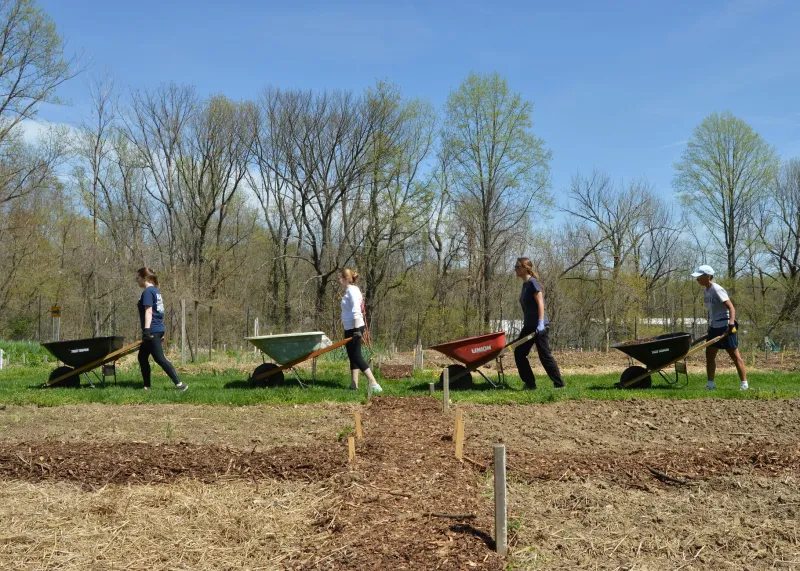
There is a particular kind of knowledge that passes between a grandmother and a grandchild in a garden—knowledge about soil, season, and sustenance that no supermarket transaction can replicate. In neighborhoods across the United States where fresh produce is scarce, where land has been neglected or extracted for generations, and where residents have been systematically excluded from economic participation, community gardens are reclaiming something that extends well beyond food. They are reclaiming agency.
The urban agriculture movement in America has grown substantially over the past two decades, evolving from scattered guerrilla gardening efforts into a sophisticated network of community-managed growing spaces that generate food, employment, education, and social cohesion simultaneously. Understanding what these spaces represent—and what threatens them—requires looking beyond the raised beds and composting bins to the deeper dynamics of land, power, and community self-determination.
The Food Desert as Policy Outcome
The term "food desert" has entered common parlance as a descriptor for neighborhoods lacking reliable access to fresh, affordable, nutritious food. What the term sometimes obscures is that food deserts are not natural phenomena—they are policy outcomes. They are the product of decades of decisions about where supermarkets receive zoning approval, where agricultural subsidies flow, which neighborhoods receive infrastructure investment, and which communities are considered viable markets by large-scale food retailers.
In many American cities, the geography of food access maps with remarkable precision onto the geography of racial segregation and historical disinvestment. Redlined neighborhoods from the mid-twentieth century remain, in many cases, both food-insecure and economically marginalized today. The connection is not coincidental. Disinvestment begets disinvestment: when anchor institutions depart, when property values are suppressed, when residents lack purchasing power, food retailers follow the capital elsewhere—leaving communities to navigate their own sustenance.
Community gardens do not simply fill a retail gap. They challenge the premise that communities lacking commercial food infrastructure are helpless to feed themselves. They assert a form of food sovereignty—the right of communities to define, produce, and control their own food systems—that commercial models neither offer nor recognize.
What a Garden Builds
The tangible outputs of a well-functioning community garden are considerable. A single acre of intensively managed urban farmland can produce thousands of pounds of vegetables annually, meaningfully supplementing the diets of surrounding households. In cities where produce prices at corner stores—the default option in many food deserts—can run two to three times higher than at suburban supermarkets, locally grown food represents a genuine economic relief for participating families.
But the economic contributions of urban gardens extend well beyond produce value. Many community growing spaces have evolved into training grounds for agricultural and food-system employment. Programs in cities like Milwaukee, Baltimore, and Oakland have formalized this pathway, offering stipends to youth participants who learn crop production, food safety, and small business management while contributing to the garden's output. Graduates of these programs have gone on to launch urban farming enterprises, catering businesses, and community-supported agriculture subscriptions—creating economic activity rooted entirely within their home neighborhoods.
Farmer's markets affiliated with community gardens generate additional income streams while simultaneously increasing neighborhood access to fresh food. When these markets accept SNAP benefits—a practice that remains inconsistent but is expanding—they function as both economic development and food access infrastructure.
The Social Architecture of Shared Land
The social dimensions of community gardens are less easily quantified but no less significant. Researchers studying community garden participants consistently identify elevated levels of social cohesion, civic engagement, and sense of neighborhood belonging among regular participants. Shared labor creates shared investment—in the land, in the harvest, and in one another.
For immigrant and refugee communities in particular, gardens carry profound cultural significance. The ability to grow familiar crops—bitter melon for Southeast Asian families, tomatillos for Mexican American households, callaloo for Caribbean communities—preserves culinary heritage and provides a tangible connection to places of origin. In cities with significant immigrant populations, community gardens have become some of the most genuinely multicultural public spaces available, hosting exchanges of seeds, recipes, and agricultural knowledge that cross linguistic and national boundaries.
Intergenerational programming within community gardens has demonstrated particular promise for youth development. Young people who participate in garden-based education programs show improvements in nutritional knowledge, willingness to consume vegetables, and environmental awareness. More broadly, they develop a relationship with land and food production that urban life rarely otherwise affords—a relationship that carries implications for how they understand health, ecology, and community responsibility.
The Land Question
For all that community gardens offer, they operate under a persistent and serious vulnerability: they do not, in most cases, own the land they cultivate. The majority of urban growing spaces in the United States occupy land through informal arrangements, short-term leases, or temporary-use agreements with municipal governments or private owners. This precarity is not incidental—it is the defining structural challenge of the urban agriculture movement.
The pattern is familiar and deeply frustrating to longtime urban farmers. A community invests years of labor in transforming a vacant, blighted lot into a productive growing space. The surrounding neighborhood becomes more desirable—in part because of the garden's presence. Property values rise. The land becomes attractive to developers. The lease is terminated, the garden is demolished, and the community loses not only its food source but the social infrastructure and collective investment the space represented.
This dynamic, which urban planners sometimes call the "green gentrification" paradox, highlights the tension between community improvement and community displacement. Gardens make neighborhoods better. Better neighborhoods attract capital. Capital displaces the very communities whose labor created the improvement.
Addressing this requires structural solutions. Community land trusts—nonprofit organizations that acquire land and hold it permanently for community benefit, removing it from the speculative market—have emerged as one of the most promising mechanisms for securing permanent garden tenure. Cities including Burlington, Vermont, and Irvine, California, have demonstrated that community land trusts can successfully protect urban agricultural space over the long term. Expanding this model requires both policy support and sustained philanthropic investment.
Funding Gaps and Institutional Barriers
Beyond land tenure, community gardens face persistent resource constraints that limit their scale and sustainability. Soil remediation—often necessary in urban lots with histories of industrial use or lead contamination—can be prohibitively expensive for volunteer-run organizations. Water access, tool storage, infrastructure maintenance, and organizational capacity all require funding that many gardens struggle to secure consistently.
Grant funding for urban agriculture, while growing, remains fragmented across multiple federal departments, foundation priorities, and municipal programs—each with its own application requirements, reporting obligations, and eligibility criteria. Navigating this landscape demands administrative capacity that small, community-based garden organizations frequently lack. Technical assistance organizations that help gardens access and manage funding play a critical role in the ecosystem, yet they are themselves chronically underfunded.
Jan Kalyan Parishad believes that sustainable investment in community food systems requires funders—both public and private—to simplify access pathways, reduce administrative burden, and commit to multi-year funding relationships that allow organizations to plan and grow rather than perpetually scramble for annual renewal.
Growing Toward Justice
The community garden is, at its core, an act of refusal. It refuses the premise that some neighborhoods do not deserve access to fresh food. It refuses the assumption that land in low-income communities exists primarily for extraction and development. It refuses the erasure of agricultural knowledge, cultural heritage, and community capacity that disinvestment attempts to accomplish.
In that refusal lies something powerful—a vision of community wellness that is self-determined, land-rooted, and oriented toward long-term flourishing rather than short-term transaction. The seeds being planted in vacant lots across America's disinvested neighborhoods are not merely botanical. They are seeds of a different relationship between communities and the land, the food, and the economic systems that shape their lives. That relationship is worth cultivating with every resource and policy tool available.