Shelved and Silenced: What Curriculum Censorship Is Costing the Students Who Can Least Afford It
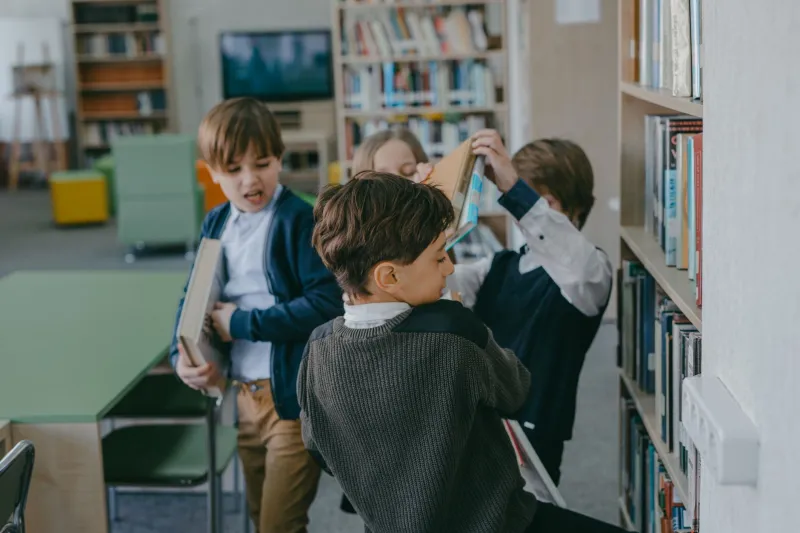
In a public school library in a low-income neighborhood, a teenager reaches for a book she heard about from a friend — only to find an empty space where it used to sit. The title was removed three weeks earlier following a district-level review prompted by a handful of formal complaints. She does not have a library card for the county system. Her family does not own a personal device with reliable internet access. That book, for her, is simply gone.
This is not an isolated moment. It is a pattern playing out in communities across the United States, quietly compounding the educational disadvantages already faced by millions of students who attend under-funded schools in economically strained neighborhoods. While debates over book banning often dominate national headlines, the conversation rarely centers on the students who are most harmed by these decisions — and why the consequences for them are categorically different from those faced by their more privileged peers.
A Growing Wave with an Uneven Tide
According to data compiled by the American Library Association, challenges to books in schools and libraries reached record levels in recent years, with thousands of individual titles targeted across dozens of states. The scope of these removals spans fiction, memoir, history, and health education — materials that often serve as the primary or sole entry point for students encountering perspectives different from their immediate surroundings.
What makes this trend particularly consequential in under-resourced districts is the absence of alternatives. In more affluent communities, a student whose school removes a book can visit a well-funded public library, purchase the title online, or access a digital lending platform through a home broadband connection. These options exist in theory for all students, but in practice, they require financial resources, transportation, and technology access that millions of American families simply do not have.
The result is a two-tiered system of intellectual access — one where the practical effects of censorship fall almost exclusively on those already navigating the steepest educational disadvantages.
The Curriculum as a Tool of Equity — or Its Opposite
Educators and community advocates have long understood that what students read in school is not merely an academic exercise. It is an act of recognition. When a young person encounters a story that reflects their own family's history, their community's struggle, or their cultural identity, something shifts — not just in their engagement with the material, but in their understanding of their own place in the broader social fabric.
Conversely, when those stories are systematically removed, the message — whether intended or not — is that certain experiences are too controversial, too uncomfortable, or simply too marginal to be part of the educational mainstream. For students from communities of color, immigrant families, and low-income households, this kind of erasure carries a weight that goes well beyond any single classroom assignment.
Curriculum restrictions that limit discussions of race, historical injustice, gender identity, or economic inequality do not create neutral educational environments. They create environments where the lived realities of a significant portion of the student body are rendered invisible — and where critical thinking tools are quietly dismantled before students have had the chance to develop them.
The Grassroots Response: Filling the Gaps That Policy Creates
In the face of these institutional pressures, community organizations across the country have begun developing their own responses — some formal, some improvised, all rooted in a shared conviction that access to knowledge is a matter of public welfare, not political preference.
Neighborhood literacy organizations in cities including Chicago, Houston, and Atlanta have launched informal lending libraries specifically stocked with books that have been removed from local school shelves. These efforts, often run by volunteers operating out of community centers, churches, and even private homes, provide students with access to materials their districts no longer offer — without requiring a formal library card, a digital device, or any cost to the family.
Other organizations have partnered with independent bookstores and publishers to distribute free or heavily subsidized copies of challenged titles directly to students in affected districts. Some have organized community reading circles where families, not just children, engage with contested books together — transforming an act of censorship into an occasion for intergenerational dialogue.
Advocacy groups have also begun attending school board meetings in greater numbers, offering public testimony and, in some cases, legal support to educators who face professional pressure for assigning materials that fall outside newly restricted guidelines. These efforts represent a recognition that the classroom does not exist in isolation — that what happens inside school buildings is shaped by the civic health of the communities surrounding them.
When Silence Becomes a Structural Barrier
The consequences of curriculum censorship extend beyond any individual student's reading list. When schools in under-resourced communities limit access to diverse perspectives, they also limit students' preparation for participation in a pluralistic society — and in a knowledge-based economy where critical analysis, cultural competency, and intellectual flexibility are increasingly prized by employers and universities alike.
Research consistently demonstrates that students who engage with a broad range of texts — including those that challenge comfortable assumptions — develop stronger analytical skills, greater empathy, and more sophisticated communication abilities. These are not soft outcomes. They are measurable competencies that shape long-term economic mobility and civic engagement.
Stripping these opportunities from students in already disadvantaged communities is not a neutral act. It is a structural decision with structural consequences — one that quietly reinforces the very inequalities that public education was designed to address.
Preserving Intellectual Freedom as a Community Value
At Jan Kalyan Parishad, the principle that community development depends on the full intellectual participation of all community members is foundational. Education is not merely a service delivered to children. It is the mechanism through which communities build the capacity to understand, articulate, and ultimately transform the conditions of their own lives.
When that mechanism is compromised — when the books disappear and no alternative is offered, when the curriculum narrows and no one notices, when the silence spreads and becomes ordinary — the damage is not confined to a single classroom or a single school year. It accumulates across generations, shaping what young people believe is possible for themselves and for their communities.
The organizations working to restore access to banned and restricted materials are doing more than defending a reading list. They are insisting that every student, regardless of zip code or household income, deserves the full breadth of human thought and experience. That insistence is, at its core, an act of community development — and it deserves to be recognized and supported as such.
The shelves may be emptied by policy. They can be restocked by community will.